Get your anchors
tested & certified.
Proof load testing and roof anchor certification Australia-wide. Rapid mobilisation. RPEQ-reviewed draft reports within 48 hours of testing; final signed reports within 5 business days.
Anchor testing that producesevidence, not assumptions.
Anchor Testing Australia scopes and executes proof load testing, ultimate load testing, displacement monitoring, and test-specification support for post-installed anchors in concrete, masonry, and rock.
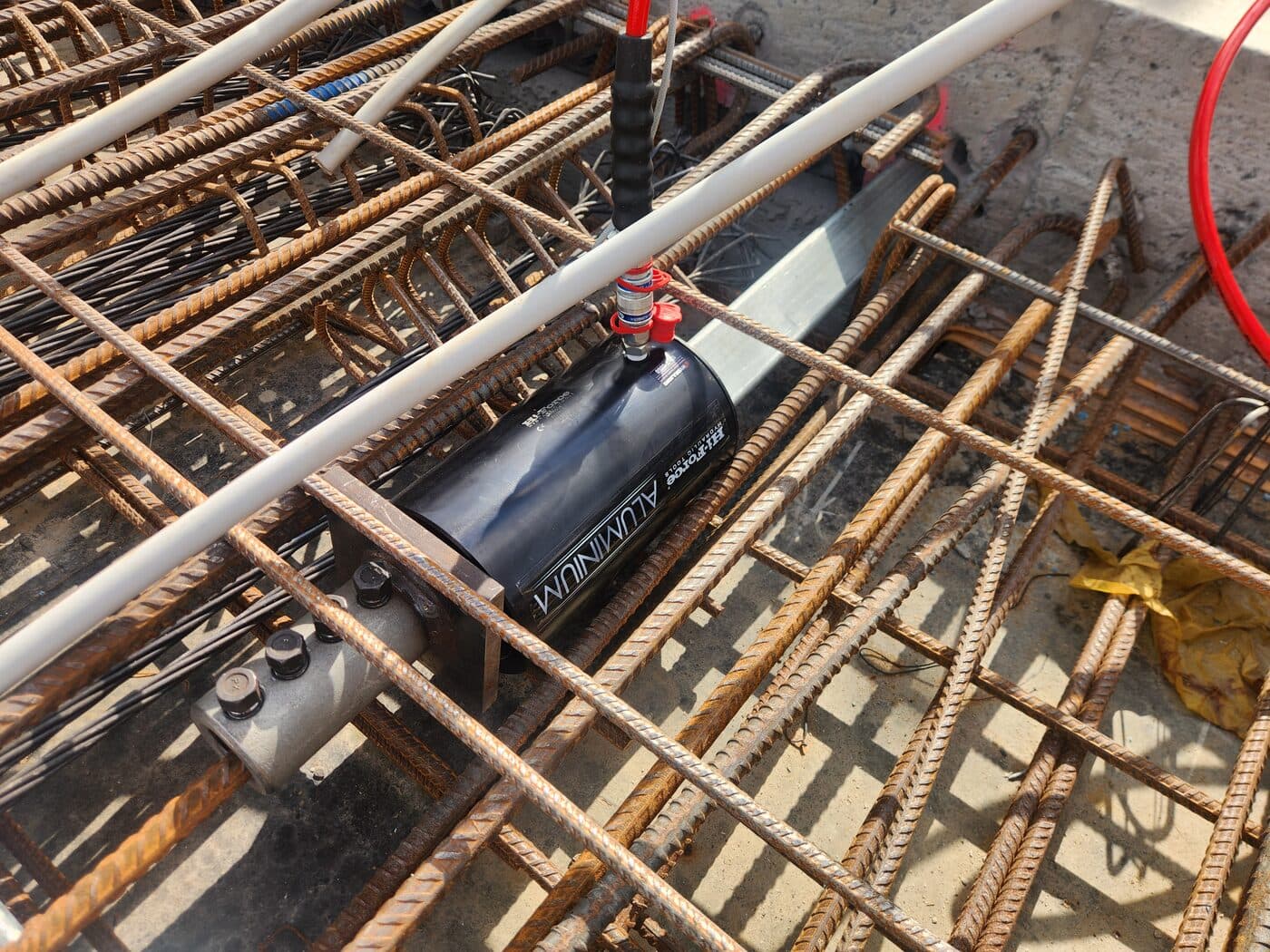
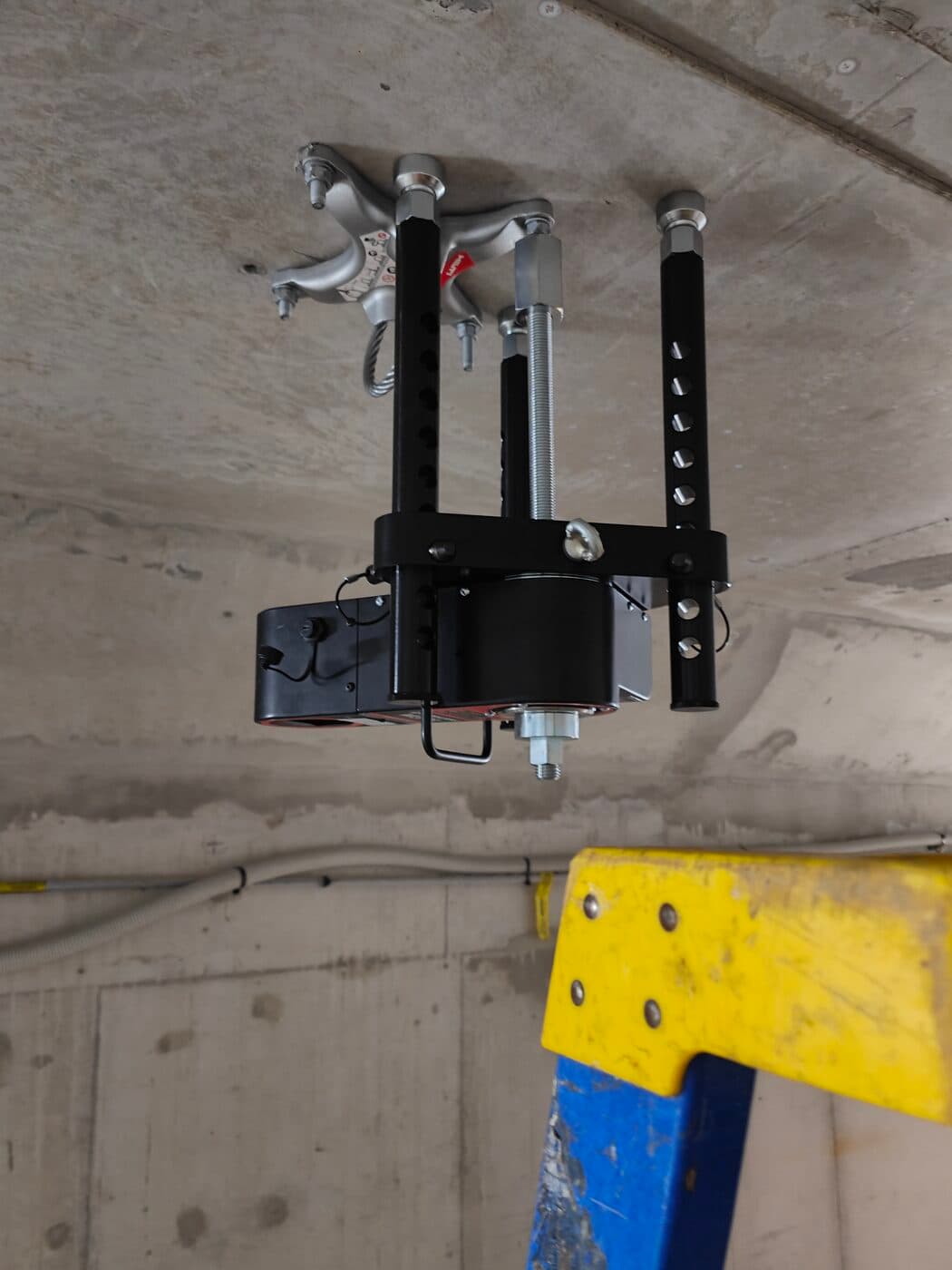
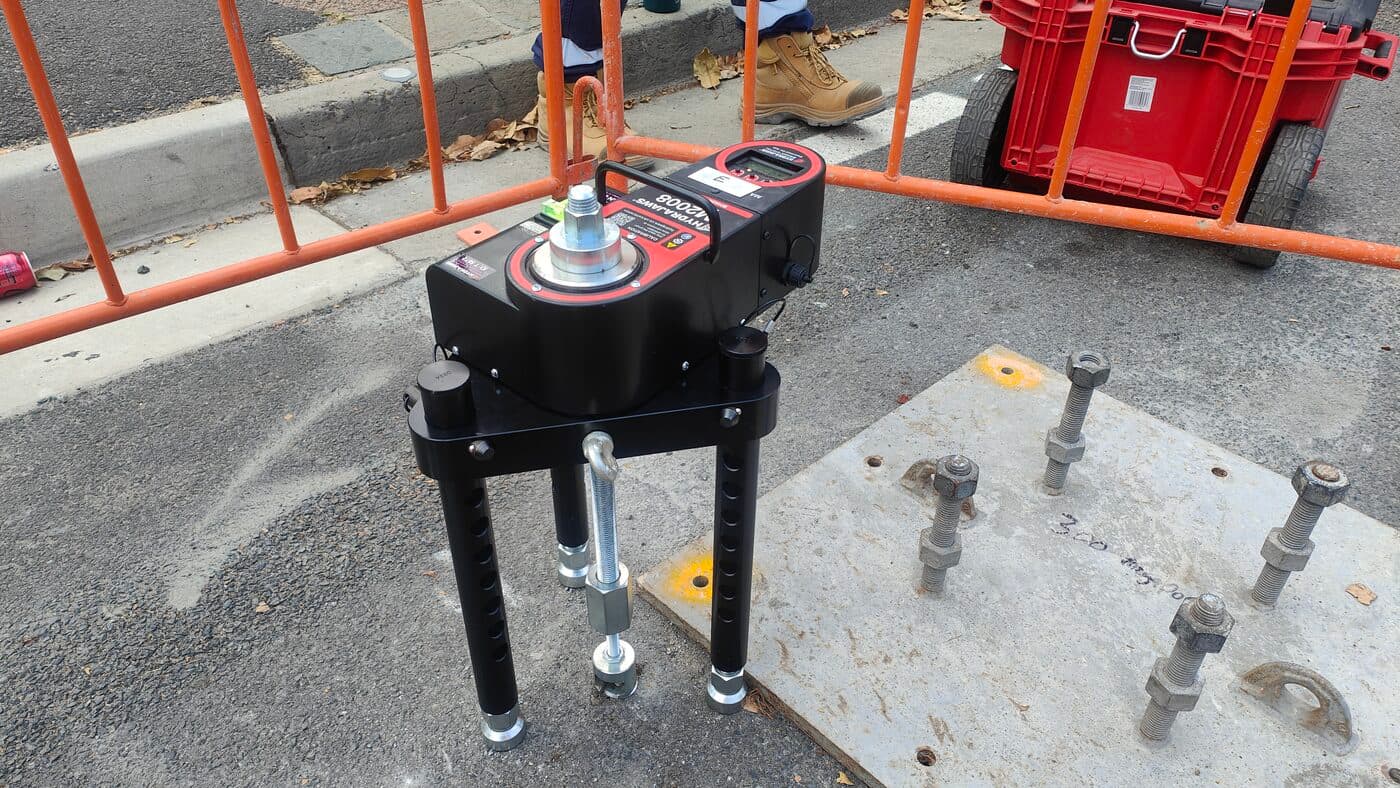
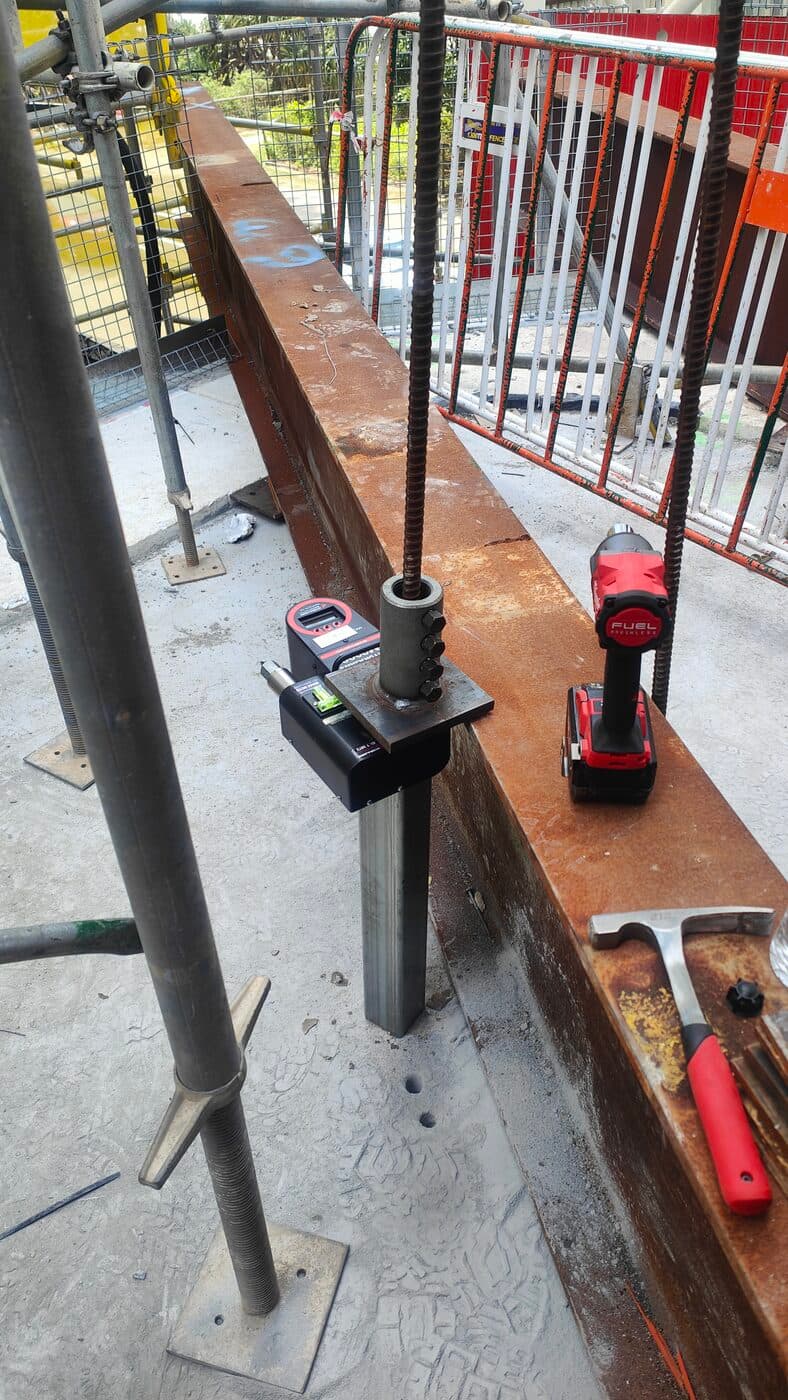
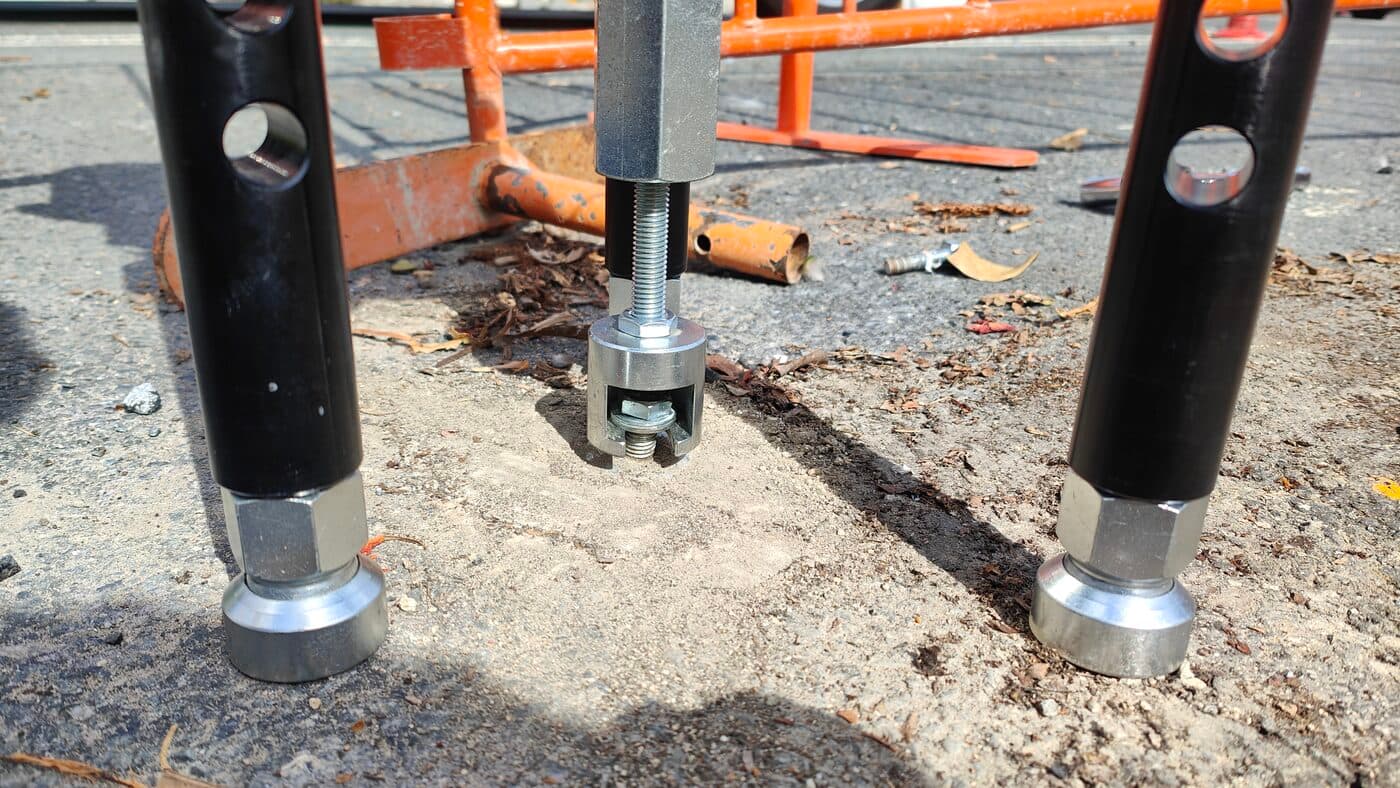
Hydraulic ram positioned within a rebar cage to proof-test a chemically-set anchor before the concrete pour.
Choose the right programme before you mobilise.
Different anchor risks require different testing pathways. ATA separates routine verification, capacity establishment, movement tracking, and specification support so the field method matches the engineering question.
Production anchor verification
For installed anchors that must remain in service after the test. Used to verify installation quality against a nominated proof load and hold period.
Capacity establishment
For substrates or applications where published design data is insufficient. Used to determine the actual anchor-substrate capacity through destructive testing.
Movement tracking
For chemical anchors, variable substrates, and high-consequence works where movement data is needed to detect progressive bond failure.
Specification support
For engineers, contractors, and asset owners who need proof loads, sampling rates, test configuration, and failure criteria defined before mobilisation.
Height safety compliance
For building owners, facility managers, and contractors who need roof anchor point certification, testing, and periodic recertification of fall arrest anchor points per AS 5532:2025 and AS/NZS 1891.4:2025.
Construction site verification
For ITP hold points on base plates, facade brackets, and plant frames. Independent of the installer. Sampled proof load of production anchors that stay in service.
Chemical pull testing
For chemset, Hilti, Ramset, Fischer, and other injection-mortar jobs after drill, clean, inject, and cure. Trade name for a chemical-anchor proof load.
Retention and cuttings
For grouted soil nails and ground anchors to AS 4678, VicRoads Section 683, and TfNSW R64. Suitability and acceptance tests with creep holds, not a 30-second construction-anchor proof load.
Installation quality is not a catalogue value.
The anchor can only be accepted when the field evidence matches the design intent. That means defining the test brief up front, loading in the correct configuration, and recording more than just the peak number on the gauge.
We define the proof load, sample size, hold window, monitoring profile, and pass criteria before the jack is fitted.
Hydraulic testing equipment and gauges with current calibration records, suitable for routine verification and destructive test programmes.
Each programme closes with a report that captures setup, readings, observations, failure behaviour, and the acceptance decision.
Receive the test brief
Drawings, anchor schedules, substrate details, and the governing standard are reviewed before site attendance.
Configure the rig
The frame is aligned to the anchor, the configuration is checked as confined or unconfined, and displacement references are set where required.
Load and hold
The anchor is loaded in a controlled ramp to the nominated proof or ultimate load, then held and observed for load decay and movement.
Assess the outcome
Peak load, sustained load, displacement, and site observations are consolidated into an engineer-reviewed acceptance record.
Standards that define the brief, the load, and the acceptance decision.
Anchor design and failure-mode framework for concrete applications.
Selection, installation, proof testing, and ultimate testing guidance for post-installed anchors.
Australian site testing guidance covering proof tests, ultimate tests, and masonry applications.
Project-proven specification for bonded anchors, proof-load multipliers, and lot-based sampling rates.
Soil nail and ground-anchor testing: suitability tests, acceptance tests, and creep holds on grouted bars.
Displacement data catches what load-only testing can miss.
Chemical anchors and variable substrates can sustain load while movement trends reveal a deeper bond problem. For that reason, ATA uses displacement monitoring wherever the consequence justifies it.
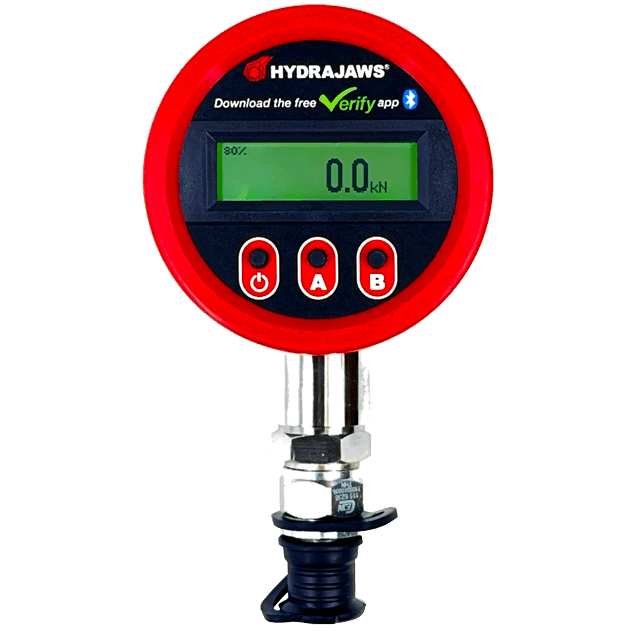
Product imagery on this page is credited to the official Hydrajaws product page below.
Anchor Testing & Pull-Out Testing
Non-destructive proof load verification for production anchors per AS 5216 and AEFAC TN05.
Anchor Point Certification & Testing
Roof anchor point certification, testing and periodic recertification per AS 5532:2025 and AS/NZS 1891.4:2025.
Rock Anchor Testing
Specialist anchor testing in Brisbane rock substrates and heterogeneous Queensland geology.
VicRoads 680 & Testing Standards
Plain-language guide to VicRoads Section 680, AS 5216, AEFAC TN05, BS 8539, and AS 5532.
Book anchor testing Brisbane, anchor testing Sydney, or anchor testing Melbourne. Proof load testing and roof anchor certification in all 20 cities.
Service locations, state by state
All 20 locationsAnchor testing questions before booking.
What anchor testing services does ATA provide?
ATA provides proof load testing, construction anchor testing, drill and epoxy (chemset) pull testing, soil nail testing, ultimate load testing, displacement monitoring, anchor design advisory, rock anchor testing, masonry anchor testing, and fall arrest anchor point testing. Each test pathway is selected against the anchor type, substrate, standard, and acceptance criteria for the project.
How quickly can ATA attend site?
For Brisbane and Southeast Queensland projects, ATA can often mobilise within 24 hours once the test brief is confirmed. Interstate work is usually planned as fly-in mobilisation, with typical lead times of 3 to 7 business days for Sydney and Melbourne and longer for remote projects.
Which standards does ATA test to?
ATA test briefs reference AS 5216:2021, BS 8539:2012+A1:2021, AEFAC TN05, VicRoads Section 680, VicRoads Section 683, AS 4678, TfNSW R64, EOTA TR 054, AS 5532:2025, and AS/NZS 1891.4:2025 where relevant. The governing standard depends on the anchor type, substrate, and application.
Do ATA reports include engineering review?
Yes. ATA reports document the test setup, applied load, hold period, displacement data where recorded, observations, and acceptance outcome. Reports are reviewed by qualified engineers and can be signed for the relevant Australian jurisdiction.
Get ATA Certified
Technical training for installers, testers, engineers, and construction managers. Four progressive tiers covering anchor types, installation best practices, testing methodology, and specification writing. Start with ATA Aware for free.
Need a test brief for your anchor programme?
Send your anchor schedule, drawings, or specification and we'll recommend the right pathway, the likely sampling rate, and whether displacement monitoring should be included.